Your Casino, Your Games?
05 Nov 2026

A casino pays for third-party games long after they arrive in its lobby. When the supplier takes a share of gaming revenue, the cost continues as customers play.
Developing content of your own offers a different commercial possibility: retaining more of that revenue after content fees. The value depends on creating games customers want to play, as well as deciding how much of the technology to own and operate.
US online casino operator Rush Street Interactive disclosed that it generally pays much lower fees on its proprietary casino games than on third-party content. Its proprietary-game fees primarily relate to hosting, remote gaming servers and intellectual property licences. Ownership can therefore change the ongoing economics of supplying a game, giving operators a reason to consider it alongside buying established content.
Stake offers an example of these approaches working together. Its Originals, Engine-listed developers and other providers all contribute to its offering. Tanzanite’s analysis of its reported catalogue and cumulative wagering illustrates why game count alone is an incomplete basis for deciding where to invest. Those wagering totals span different provider histories, so they do not establish which approach is performing best today.
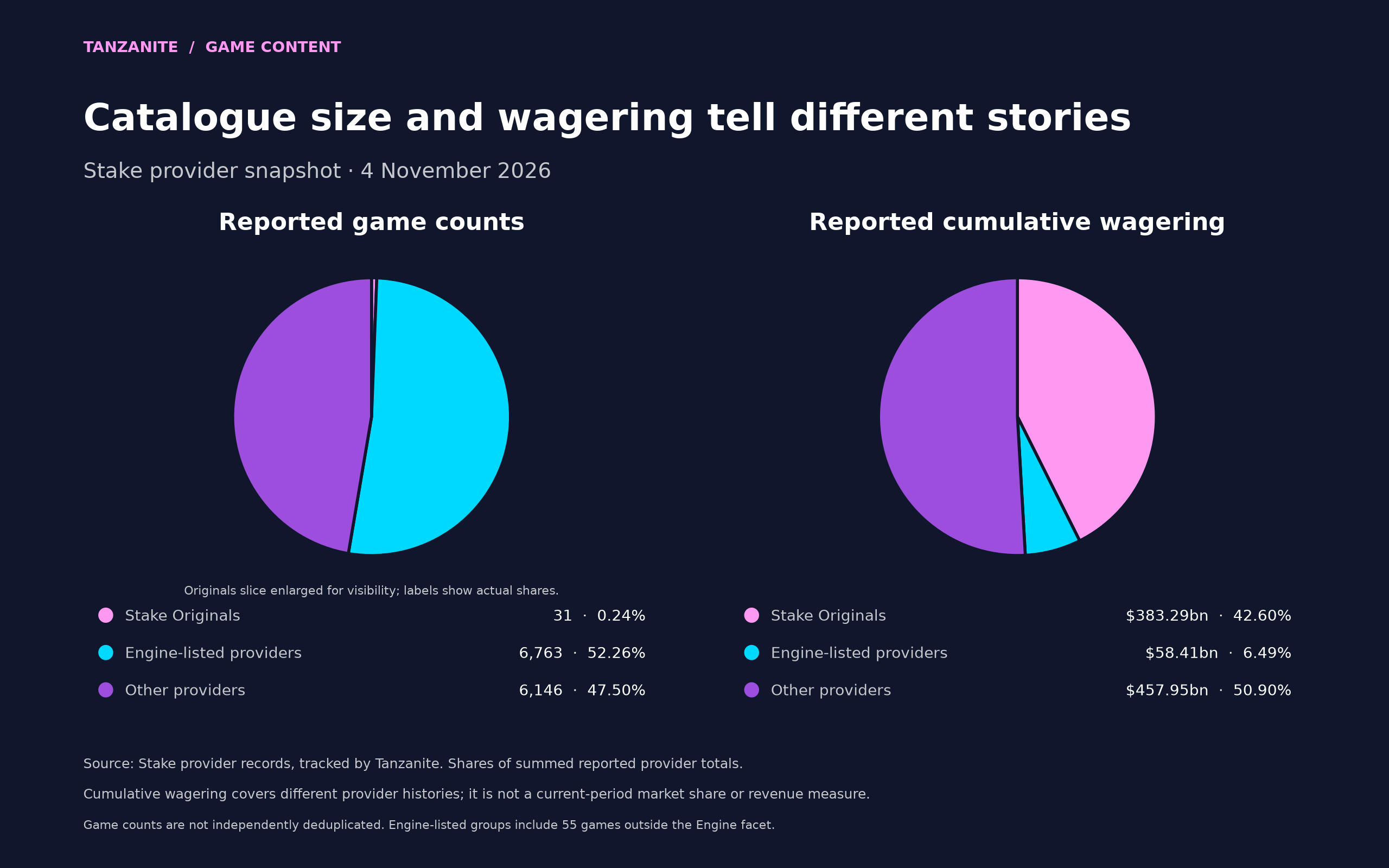
The operator’s task is to identify where proprietary content could earn its place. A distinctive game may give customers a reason to choose your casino, but a lower supplier fee has limited value if the game attracts little activity. The investment case needs an explanation of why customers would play it, alongside the revenue you expect to retain.
Owning the infrastructure also need not mean developing every game internally. Stake Engine lets external creators build games while the platform reviews and hosts them. Its published Stake-only payment models offer developers a share of actual or expected gaming revenue. That creates a framework for sourcing content from outside developers while operating the platform behind it.
For another casino, the appropriate investment could be smaller: commissioning a game or using licensed remote gaming server technology. Each route brings different responsibilities for development, testing, hosting and maintenance. These costs belong alongside any reduction in ongoing content fees when assessing the opportunity.
Established third-party games can remain part of that strategy. An operator can invest in selected proprietary titles while continuing to offer studios customers already seek out. The decision is where ownership would strengthen the offering enough to justify the work and expense involved.
Tanzanite provides product audits, bankroll-management advisory and introductions for game aggregators. We can help you assess how proprietary content would fit your existing offering and where external suppliers remain useful.
Talk to Tanzanite about the next step in your casino’s game-content strategy.
Sources:
Rush Street Interactive: 2023 annual report
Stake Engine: distribution and developer payment models
Tanzanite solutions
Related reading:
Hot or Not Wallets
The Many Faces of Marketing